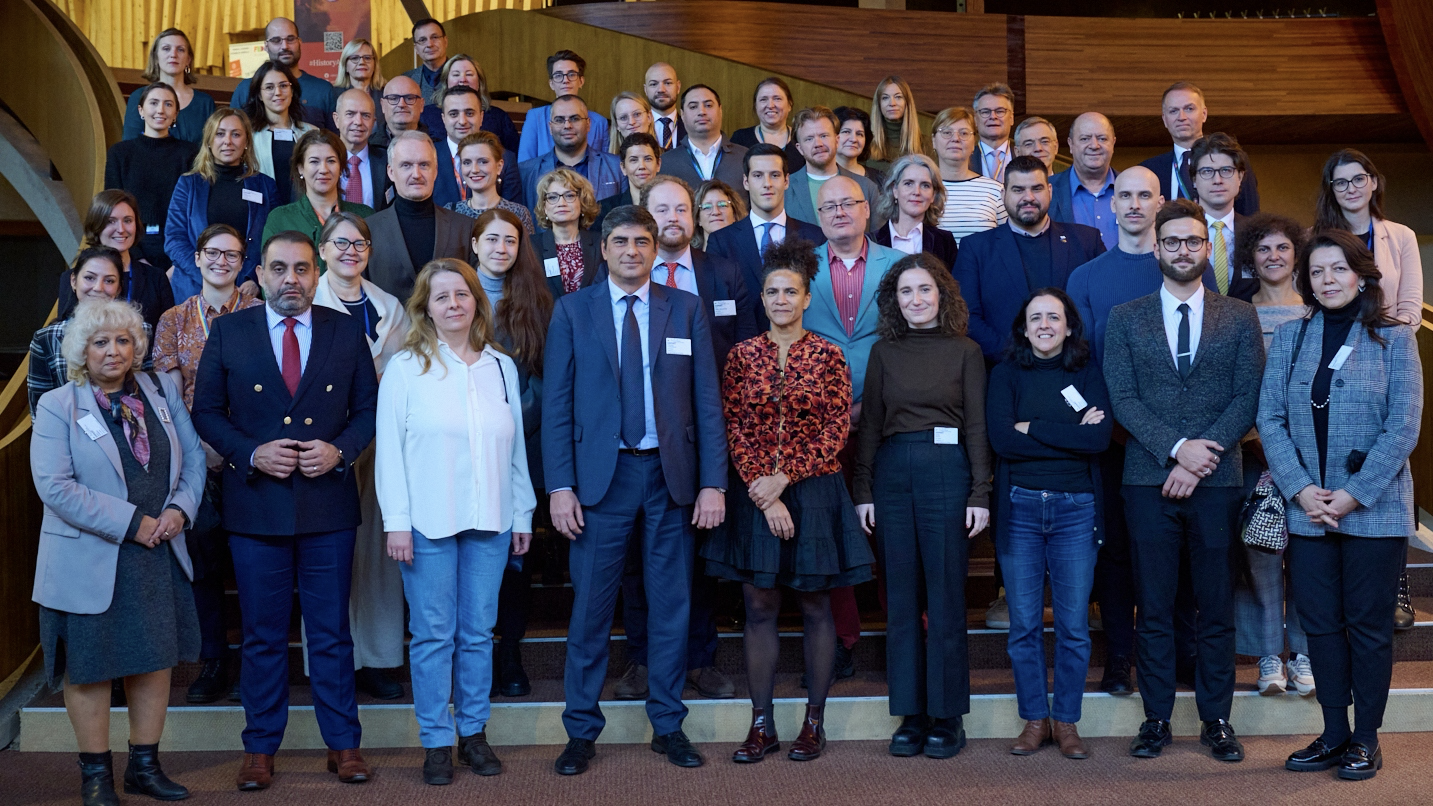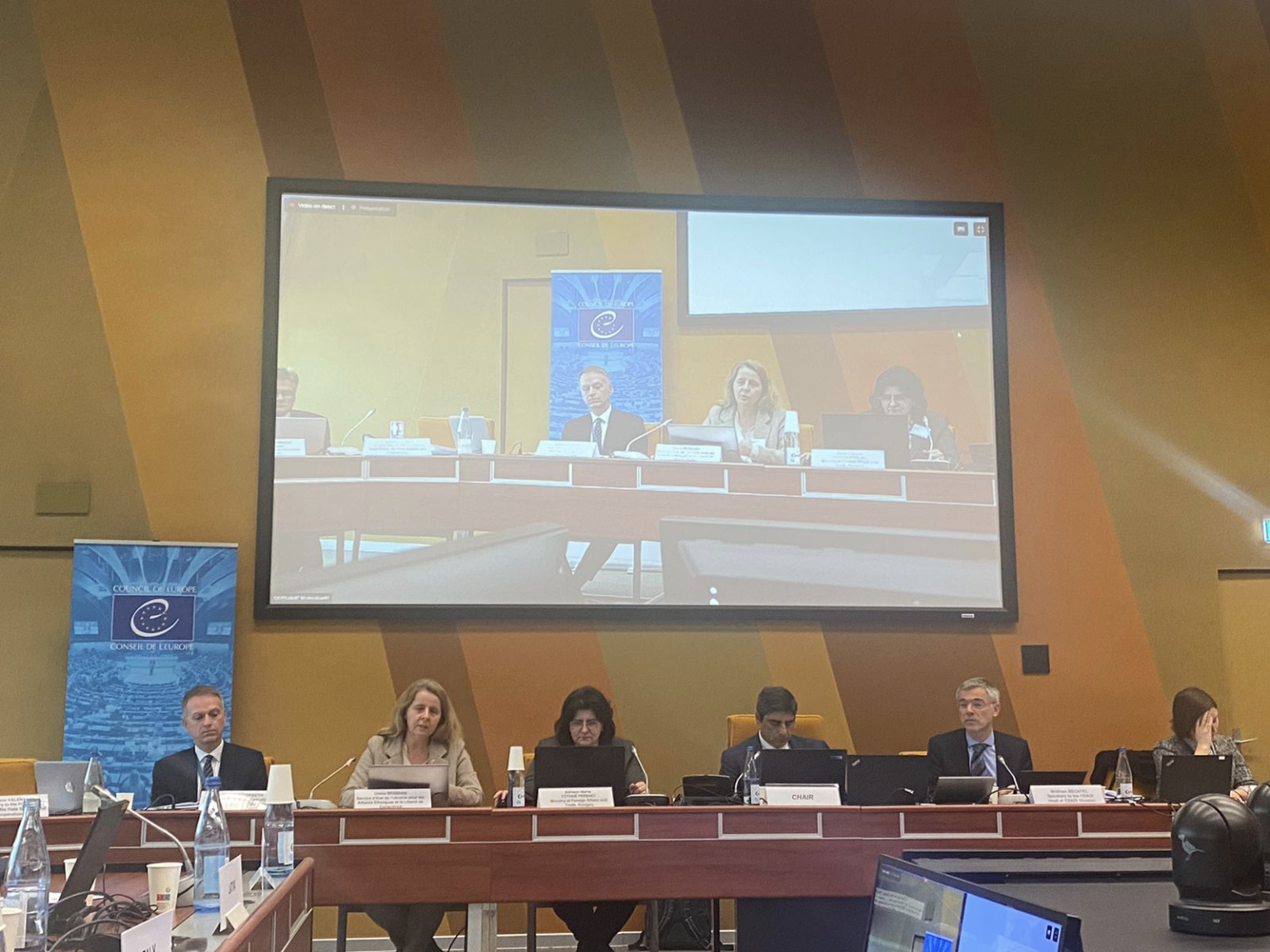
November 29 to December 1, 2022, at the 6th plenary session of the Council of Europe Steering Committee for Anti-Discrimination, Diversity and Inclusion (CDADI), Olena Bogdan, Head of the State Service of Ukraine for Ethnic and Religious Affairs, invited member countries to examine the ideology behind Russia’s attempted invasion of Ukraine.
While Russia is attempting to invade Ukraine and voices nuclear threats to Ukraine and the world, one can notice distinctive Russian narratives that accompany the aggression. These narratives are present in a wide range of Russian sources: in the way mass media news are framed, in speeches of top political figures, religious leaders, diplomats, academics, artists, and population at large. They constitute a counter statement to Council of Europe values and in particular are in sharp contrast to values of non-discrimination, diversity and inclusion.
These narratives deny the existence of a number of identities, with a particular accent on denying Ukrainian and Belarus identities. They also vilify Ukraine, the West (the United States in particular), and LGBT people. The democratic world is presented as evil and Russian international interventions, including its military attacks, are promoted as benevolent and justified. Instead of perceiving the Russian identity as an equal part of an inclusive world where various identities can enjoy respect and freedom, Russia is constructing a quasi-messianic discourse of its savior role in a global decadence and global conflict while in reality committing unjustified violence and horrific war crimes.
Putin’s regime has been developing these narratives over two decades while consolidating its power in the Russian Federation. These narratives include the following key statements (the list is not comprehensive).
Russian identity and culture are presented as better, higher and richer than other identities and cultures.
The sovereignty of Ukraine is denied and so is Ukrainian civic identity and Ukrainian culture. Ukrainian identity is presented as a variation of Russian identity and the Ukrainian language as a dialect of the Russian language. Respectively, Ukrainian history as part of Russian history.
The so called “Russian world” (russkiy mir) is presented as having no borders and present everywhere where the Russian language is spoken.
They promote a claim that there is a global conspiracy of the West to weaken and destroy Russia, in particular through spreading Western influence over Ukraine. And thus, they reason, Russia has the right to attack Ukraine and other countries.
Ukraine and the West are presented as full of violence, inequality, injustice and evil. The discourse went actually as far as to mention “satanization” of the United States and Ukraine, stating that Satanic Churches proliferate in these two countries, and respectively calling for the “de-satanization” of Ukraine.
The claim is promoted that Russia has a mission to save to world from moral decadence.
Those who express disagreement with the above-mentioned narratives and attempt to counteract them, are accused of “Russophobia” and are presented as disinformation victims at the very least and often as “Nazis” who have to be exterminated.
These narratives not only are directly applied to justify Russia’s attempted invasion of Ukraine but they also became part of worldview for a number of people who were exposed to them in Russia and other parts of the world. Proper attention to this phenomenon, in particular awareness of these narratives and resilience to them, must be part of security measures not only in Ukraine but in all countries of the free, democratic world.
Some scholars already use the term “ruscism” to mark the ideology of abusing and manipulating Russian identity, culture and history to mobilize support for a coercive regime, unequal perception of nations, identities and cultures, warfare and aggressive expansionistic interventions into affairs of other states.

Olena Bogdan has served as the CDADI Vice-Chair since June 2021 to December 2022. She was twice elected to this position by country members’ secret vote and completed her duties following the procedural limit of two elections.